Shadows of the Past: Living with Jim Crow
Explore the history of the US Civil Rights movement in this English A2 chapter book. Learn about Jim Crow laws, segregation, and the fight for equality through Thomas's eyes, complete with Thai translations.
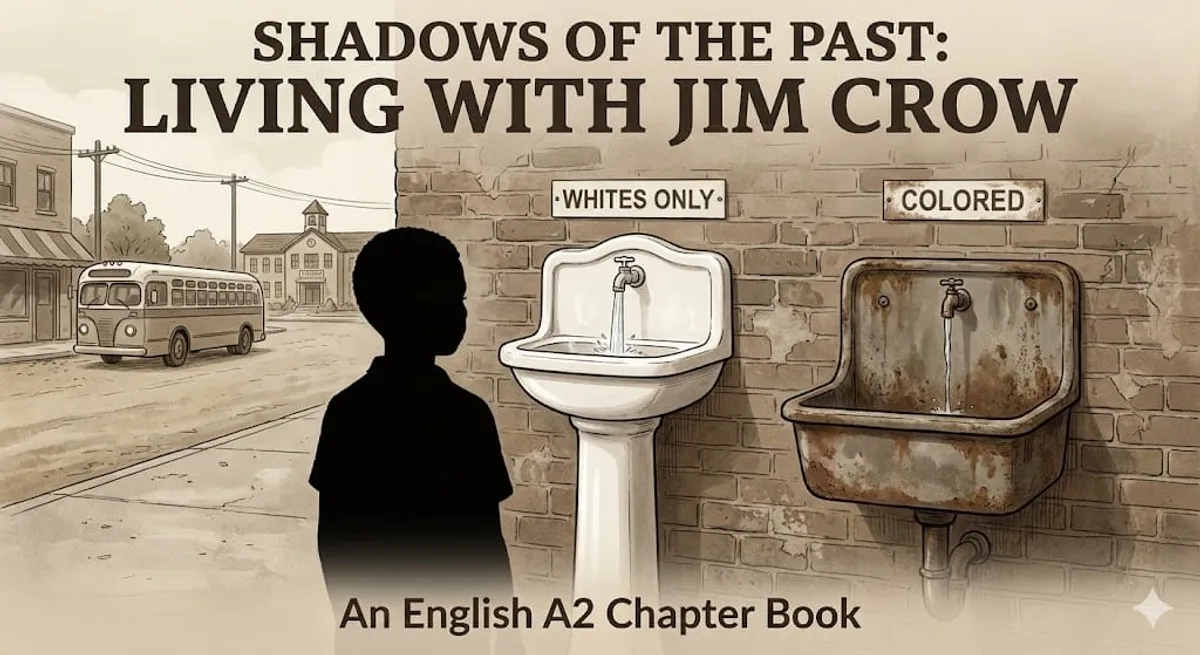
Title
Shadows of the Past: Living with Jim CrowLanguage
enSubtitle
An English A2 Chapter BookChapters
- Title: Chapter 1: A Divided TownContent:
Thomas lived in a small town in Alabama. The year was 1950. The town was pretty, but it was divided. There was a white side and a Black side. This was because of Jim Crow laws. These laws said that white people and Black people must stay apart.
Thomas was a Black boy. He could not play in the big park near the center of town. That park was only for white children. Thomas felt sad about this. He did not understand why the color of his skin made him different. He wanted to play with everyone.
Translation:โทมัสอาศัยอยู่ในเมืองเล็กๆ ในรัฐอลาบามา ปีนั้นคือ ค.ศ. 1950 เมืองนี้สวยงามแต่ถูกแบ่งแยก มีฝั่งสำหรับคนขาวและฝั่งสำหรับคนดำ สิ่งนี้เกิดขึ้นเพราะกฎหมายจิมโครว์ กฎหมายเหล่านี้ระบุว่าคนขาวและคนดำต้องอยู่แยกกัน โทมัสเป็นเด็กชายผิวดำ เขาไม่สามารถไปเล่นในสวนสาธารณะขนาดใหญ่ใกล้ใจกลางเมืองได้ สวนแห่งนั้นมีไว้สำหรับเด็กผิวขาวเท่านั้น โทมัสรู้สึกเสียใจกับเรื่องนี้ เขาไม่เข้าใจว่าทำไมสีผิวของเขาถึงทำให้เขาแตกต่าง เขาอยากเล่นกับทุกคน
Quiz:- Question: 1. Where did Thomas live?Options:
- Text: a) New YorkValue: wrong
- Text: b) AlabamaValue: correct
- Text: c) CaliforniaValue: wrong
- Question: 2. True or False: Thomas could play in the big park near the center of town.Options:
- Text: a) TrueValue: wrong
- Text: b) FalseValue: correct
- Question: 3. Why was the town divided?Options:
- Text: a) Because of a riverValue: wrong
- Text: b) Because of Jim Crow lawsValue: correct
- Text: c) Because of a warValue: wrong
- Title: Chapter 2: Two Different SchoolsContent:
Thomas went to school every morning. His school was small and old. The books were torn and missing pages. In the winter, the heater did not work well. It was very cold. The white children went to a big, brick school nearby. They had new books and a warm building.
This was called "separate but equal," but it was not equal at all. Thomas loved to learn math and history. He tried his best, even with old books. He knew that education was important. He wanted to be a teacher one day to help others learn.
Translation:โทมัสไปโรงเรียนทุกเช้า โรงเรียนของเขาเล็กและเก่า หนังสือเรียนขาดและหน้าหนังสือหายไป ในฤดูหนาวเครื่องทำความร้อนทำงานได้ไม่ดี มันหนาวมาก เด็กผิวขาวไปเรียนที่โรงเรียนตึกอิฐขนาดใหญ่ที่อยู่ใกล้ๆ พวกเขามีหนังสือใหม่และอาคารที่อบอุ่น สิ่งนี้เรียกว่า "แยกกันแต่เท่าเทียม" แต่มันไม่เท่าเทียมเลย โทมัสชอบเรียนคณิตศาสตร์และประวัติศาสตร์ เขาพยายามอย่างเต็มที่แม้จะมีแค่หนังสือเก่าๆ เขารู้ว่าการศึกษาเป็นสิ่งสำคัญ เขาอยากเป็นครูในสักวันหนึ่งเพื่อช่วยให้คนอื่นได้เรียนรู้
Quiz:- Question: 1. How was Thomas's school described?Options:
- Text: a) New and warmValue: wrong
- Text: b) Small and oldValue: correct
- Text: c) Big and brickValue: wrong
- Question: 2. True or False: The white children had torn books with missing pages.Options:
- Text: a) TrueValue: wrong
- Text: b) FalseValue: correct
- Question: 3. What did Thomas want to be when he grew up?Options:
- Text: a) A doctorValue: wrong
- Text: b) A teacherValue: correct
- Text: c) A bus driverValue: wrong
- Title: Chapter 3: The Back of the BusContent:
One day, Thomas and his mother took the bus to the market. The bus driver was a white man. Thomas started to sit in the front seat. His mother pulled him back quickly. "No, Thomas," she whispered. "We must sit in the back."
The front seats were reserved for white people. Even if the bus was full, Black people had to stand up if a white person wanted a seat. It was the law. Thomas looked out the window. He saw the white people sitting comfortably in the front. He felt angry but stayed quiet.
Translation:วันหนึ่ง โทมัสและแม่ของเขาขึ้นรถเมล์ไปตลาด คนขับรถเมล์เป็นชายผิวขาว โทมัสกำลังจะนั่งที่เบาะหน้า แม่ของเขารีบดึงเขากลับมา "ไม่นะ โทมัส" เธอกระซิบ "เราต้องนั่งข้างหลัง" ที่นั่งด้านหน้าถูกจองไว้สำหรับคนผิวขาว แม้ว่ารถจะเต็ม คนดำก็ต้องยืนขึ้นถ้าคนผิวขาวต้องการที่นั่ง มันคือกฎหมาย โทมัสมองออกไปนอกหน้าต่าง เขาเห็นคนผิวขาวนั่งสบายๆ อยู่ข้างหน้า เขารู้สึกโกรธแต่ก็เงียบไว้
Quiz:- Question: 1. Who was driving the bus?Options:
- Text: a) A Black manValue: wrong
- Text: b) A white manValue: correct
- Text: c) Thomas's fatherValue: wrong
- Question: 2. Where did Thomas and his mother have to sit?Options:
- Text: a) In the frontValue: wrong
- Text: b) In the middleValue: wrong
- Text: c) In the backValue: correct
- Question: 3. True or False: Black people could keep their seats if a white person wanted to sit down.Options:
- Text: a) TrueValue: wrong
- Text: b) FalseValue: correct
- Title: Chapter 4: Signs EverywhereContent:
It was a hot summer day. The sun was very strong. Thomas was thirsty. He walked to the courthouse. He saw two water fountains. One fountain looked clean and cold. It had a sign that said "Whites Only." The other fountain was dirty and rusty. It said "Colored."
Thomas wanted the cold water, but he was afraid. If he drank from the white fountain, he could get in trouble with the police. He drank from the rusty fountain. The water was warm, but he was safe. The signs were a reminder of the unfair rules.
Translation:มันเป็นวันฤดูร้อนที่ร้อนระอุ แสงแดดแรงมาก โทมัสรู้สึกกระหายน้ำ เขาเดินไปที่ศาลากลาง เขาเห็นตู้กดน้ำสองตู้ ตู้หนึ่งดูสะอาดและเย็น มันมีป้ายเขียนว่า "สำหรับคนขาวเท่านั้น" อีกตู้หนึ่งสกปรกและเป็นสนิม มันเขียนว่า "คนผิวสี" โทมัสอยากดื่มน้ำเย็นๆ แต่เขากลัว ถ้าเขาดื่มจากตู้ของคนขาว เขาอาจเดือดร้อนกับตำรวจได้ เขาจึงดื่มจากตู้ที่เป็นสนิม น้ำอุ่นแต่เขาปลอดภัย ป้ายเหล่านั้นเป็นเครื่องเตือนใจถึงกฎเกณฑ์ที่ไม่ยุติธรรม
Quiz:- Question: 1. What did the sign on the clean fountain say?Options:
- Text: a) Free WaterValue: wrong
- Text: b) ColoredValue: wrong
- Text: c) Whites OnlyValue: correct
- Question: 2. Why didn't Thomas drink from the clean fountain?Options:
- Text: a) He wasn't thirstyValue: wrong
- Text: b) He was afraid of getting in troubleValue: correct
- Text: c) It was brokenValue: wrong
- Question: 3. True or False: The water from the "Colored" fountain was cold.Options:
- Text: a) TrueValue: wrong
- Text: b) FalseValue: correct
- Title: Chapter 5: The Right to VoteContent:
Thomas's father, Mr. Jones, was a hardworking man. He wanted to vote for the new mayor. In America, voting is a right for citizens. But for Mr. Jones, it was very hard. He went to the voting office. The men there asked him impossible questions. They asked him to read very difficult legal texts.
This was a "literacy test." They also asked for money, called a "poll tax." Mr. Jones did not have enough money. He came home sad. "They do not want our voices to be heard," he told Thomas. Thomas promised to vote when he grew up.
Translation:พ่อของโทมัส นายโจนส์ เป็นคนขยันทำงาน เขาต้องการลงคะแนนเสียงเลือกนายกเทศมนตรีคนใหม่ ในอเมริกา การลงคะแนนเสียงเป็นสิทธิของพลเมือง แต่สำหรับนายโจนส์ มันยากมาก เขาไปที่สำนักงานเลือกตั้ง ผู้ชายที่นั่นถามคำถามที่เป็นไปไม่ได้กับเขา พวกเขาให้เขาอ่านบทกฎหมายที่ยากมาก นี่คือ "การทดสอบการอ่านเขียน" พวกเขายังเรียกเก็บเงินที่เรียกว่า "ภาษีการเลือกตั้ง" นายโจนส์มีเงินไม่พอ เขากลับบ้านด้วยความเศร้า "พวกเขาไม่อยากให้เสียงของเราถูกได้ยิน" เขาบอกโทมัส โทมัสสัญญาว่าจะไปเลือกตั้งเมื่อเขาโตขึ้น
Quiz:- Question: 1. What did Mr. Jones want to do?Options:
- Text: a) Buy a carValue: wrong
- Text: b) Vote for the mayorValue: correct
- Text: c) Move to a new houseValue: wrong
- Question: 2. What is a "poll tax"?Options:
- Text: a) Money you pay to voteValue: correct
- Text: b) A tax for using the poolValue: wrong
- Text: c) Money for schoolValue: wrong
- Question: 3. True or False: The literacy test was easy for Mr. Jones.Options:
- Text: a) TrueValue: wrong
- Text: b) FalseValue: correct
- Title: Chapter 6: The Green BookContent:
The family planned a trip to visit an aunt in Chicago. Driving a car was dangerous for Black families in the South. Many hotels and restaurants would not serve them. Thomas's father bought a small book called "The Green Book."
This guide listed safe places for Black travelers. It showed which hotels were friendly. It showed where they could buy gas and food. Without this book, they might be stranded or hurt. They planned their route carefully. The Green Book was their map to safety on the long, lonely roads.
Translation:ครอบครัววางแผนไปเยี่ยมป้าที่ชิคาโก การขับรถเป็นเรื่องอันตรายสำหรับครอบครัวคนผิวดำในภาคใต้ โรงแรมและร้านอาหารหลายแห่งไม่ยอมให้บริการพวกเขา พ่อของโทมัสซื้อหนังสือเล่มเล็กๆ ชื่อ "สมุดปกเขียว (The Green Book)" คู่มือนี้ระบุสถานที่ปลอดภัยสำหรับนักเดินทางผิวดำ มันบอกว่าโรงแรมไหนเป็นมิตร บอกว่าที่ไหนเติมน้ำมันและซื้ออาหารได้ หากไม่มีหนังสือเล่มนี้ พวกเขาอาจถูกทิ้งไว้กลางทางหรือได้รับอันตราย พวกเขาวางแผนเส้นทางอย่างระมัดระวัง สมุดปกเขียวคือแผนที่สู่ความปลอดภัยบนถนนสายยาวที่เปลี่ยวเหงา
Quiz:- Question: 1. Where was the family traveling to?Options:
- Text: a) ChicagoValue: correct
- Text: b) New YorkValue: wrong
- Text: c) TexasValue: wrong
- Question: 2. What was "The Green Book" used for?Options:
- Text: a) Learning to cookValue: wrong
- Text: b) Finding safe places for Black travelersValue: correct
- Text: c) Learning to readValue: wrong
- Question: 3. True or False: All hotels welcomed Black families.Options:
- Text: a) TrueValue: wrong
- Text: b) FalseValue: correct
- Title: Chapter 7: Separate NeighborhoodsContent:
Thomas visited his cousin in a different city. His cousin lived in a crowded neighborhood. The houses were very close together. The streets were not paved well. Thomas asked, "Why don't you move to the new houses on the hill?"
His cousin laughed sadly. "We are not allowed to live there," he said. Real estate agents would not sell houses in white neighborhoods to Black families. Banks would not give them loans. This was called "redlining." It kept Black families in poor areas. They could not build wealth like white families could.
Translation:โทมัสไปเยี่ยมลูกพี่ลูกน้องในเมืองอื่น ลูกพี่ลูกน้องของเขาอาศัยอยู่ในย่านที่แออัด บ้านเรือนอยู่ติดกันมาก ถนนหนทางไม่ได้รับการปูพื้นอย่างดี โทมัสถามว่า "ทำไมนายไม่ย้ายไปอยู่บ้านใหม่บนเนินเขาล่ะ?" ลูกพี่ลูกน้องหัวเราะอย่างเศร้าๆ "เราไม่ได้รับอนุญาตให้ไปอยู่ที่นั่น" เขาบอก นายหน้าอสังหาริมทรัพย์จะไม่ขายบ้านในย่านคนขาวให้ครอบครัวคนดำ ธนาคารก็จะไม่ให้กู้เงิน สิ่งนี้เรียกว่า "การขีดเส้นแดง (redlining)" มันทำให้ครอบครัวคนดำต้องอยู่ในพื้นที่ยากจน พวกเขาไม่สามารถสร้างความมั่งคั่งได้เหมือนครอบครัวคนขาว
Quiz:- Question: 1. How was the cousin's neighborhood described?Options:
- Text: a) Crowded with unpaved streetsValue: correct
- Text: b) Big houses on a hillValue: wrong
- Text: c) Quiet and cleanValue: wrong
- Question: 2. What is "redlining"?Options:
- Text: a) Drawing pictures with red pensValue: wrong
- Text: b) A rule keeping Black families in poor areasValue: correct
- Text: c) A new type of bank loanValue: wrong
- Question: 3. True or False: Banks easily gave loans to Black families for new houses.Options:
- Text: a) TrueValue: wrong
- Text: b) FalseValue: correct
- Title: Chapter 8: Voices of ChangeContent:
As Thomas grew older, the world began to change. He heard about people protesting the bad laws. He saw news about college students sitting at lunch counters. These counters were for whites only. The students sat quietly and asked for coffee.
People yelled at them and threw food, but the students did not fight back. They were peaceful. This was called "non-violent resistance." Thomas admired their bravery. He talked to his friends about freedom. They felt a change coming. The fear was turning into hope. People were ready to stand up for their rights.
Translation:เมื่อโทมัสโตขึ้น โลกก็เริ่มเปลี่ยนไป เขาได้ยินเรื่องผู้คนประท้วงกฎหมายที่เลวร้าย เขาเห็นข่าวเกี่ยวกับนักศึกษามหาวิทยาลัยไปนั่งที่เคาน์เตอร์อาหารกลางวัน เคาน์เตอร์เหล่านี้มีไว้สำหรับคนขาวเท่านั้น นักศึกษานั่งเงียบๆ และขอซื้อกาแฟ ผู้คนตะโกนด่าทอและขว้างปาอาหารใส่ แต่พวกนักศึกษาไม่ตอบโต้ พวกเขาสงบ สิ่งนี้เรียกว่า "การต่อต้านโดยไม่ใช้ความรุนแรง" โทมัสชื่นชมความกล้าหาญของพวกเขา เขาคุยกับเพื่อนๆ เรื่องเสรีภาพ พวกเขารู้สึกว่าการเปลี่ยนแปลงกำลังจะมาถึง ความกลัวกำลังเปลี่ยนเป็นความหวัง ผู้คนพร้อมที่จะลุกขึ้นสู้เพื่อสิทธิของตน
Quiz:- Question: 1. What did the students do at the lunch counters?Options:
- Text: a) They fought with peopleValue: wrong
- Text: b) They sat quietly and asked for coffeeValue: correct
- Text: c) They broke the platesValue: wrong
- Question: 2. What is "non-violent resistance"?Options:
- Text: a) Fighting back with weaponsValue: wrong
- Text: b) Protesting peacefully without fightingValue: correct
- Text: c) Staying home and doing nothingValue: wrong
- Question: 3. True or False: Thomas admired the students' bravery.Options:
- Text: a) TrueValue: correct
- Text: b) FalseValue: wrong
- Title: Chapter 9: The Big MarchContent:
In 1963, a huge event happened. Thousands of people went to Washington, D.C. They marched for jobs and freedom. Thomas and his father took a bus to be there. They saw people of all colors holding hands. They stood near the Lincoln Memorial.
A man named Dr. Martin Luther King Jr. gave a famous speech. He said, "I have a dream." He dreamed that his children would not be judged by their skin color. Thomas cried happy tears. He felt the power of unity. The crowd cheered loudly. History was being made that day.
Translation:ในปี ค.ศ. 1963 มีเหตุการณ์ยิ่งใหญ่เกิดขึ้น ผู้คนนับพันเดินทางไปที่วอชิงตัน ดี.ซี. พวกเขาเดินขบวนเพื่อเรียกร้องงานและเสรีภาพ โทมัสและพ่อขึ้นรถบัสไปที่นั่น พวกเขาเห็นผู้คนทุกสีผิวจับมือกัน พวกเขายืนอยู่ใกล้กับอนุสรณ์สถานลินคอล์น ชายชื่อ ดร. มาร์ติน ลูเธอร์ คิง จูเนียร์ กล่าวสุนทรพจน์ที่มีชื่อเสียง เขากล่าวว่า "ข้าพเจ้ามีความฝัน" เขาฝันว่าลูกๆ ของเขาจะไม่ถูกตัดสินจากสีผิว โทมัสร้องไห้ด้วยความดีใจ เขาสัมผัสได้ถึงพลังแห่งความสามัคคี ฝูงชนโห่ร้องเสียงดัง ประวัติศาสตร์กำลังถูกจารึกในวันนั้น
Quiz:- Question: 1. Where did the big march take place?Options:
- Text: a) AlabamaValue: wrong
- Text: b) Washington, D.C.Value: correct
- Text: c) ChicagoValue: wrong
- Question: 2. Who gave the famous "I have a dream" speech?Options:
- Text: a) The PresidentValue: wrong
- Text: b) Thomas's fatherValue: wrong
- Text: c) Dr. Martin Luther King Jr.Value: correct
- Question: 3. True or False: Thomas felt sad during the speech.Options:
- Text: a) TrueValue: wrong
- Text: b) FalseValue: correct
- Title: Chapter 10: New LawsContent:
The protests and marches worked. In 1964, the government passed the Civil Rights Act. This law ended segregation in public places. It made Jim Crow laws illegal. Later, the Voting Rights Act was passed. It helped Black people vote freely.
Thomas was a young man now. He walked into a restaurant that used to be "Whites Only." He ordered a burger and sat down. No one stopped him. The laws had changed, but Thomas knew that hearts needed to change too. It was a new beginning for America.
Translation:การประท้วงและการเดินขบวนได้ผล ในปี ค.ศ. 1964 รัฐบาลผ่านพระราชบัญญัติสิทธิพลเมือง กฎหมายนี้ยุติการแบ่งแยกเชื้อชาติในที่สาธารณะ มันทำให้กฎหมายจิมโครว์เป็นสิ่งผิดกฎหมาย ต่อมา พระราชบัญญัติสิทธิการเลือกตั้งก็ผ่านออกมา มันช่วยให้คนผิวดำลงคะแนนเสียงได้อย่างอิสระ ตอนนี้โทมัสเป็นชายหนุ่มแล้ว เขาเดินเข้าไปในร้านอาหารที่เคยติดป้าย "สำหรับคนขาวเท่านั้น" เขาสั่งเบอร์เกอร์และนั่งลง ไม่มีใครห้ามเขา กฎหมายเปลี่ยนไปแล้ว แต่โทมัสรู้ว่าจิตใจของผู้คนก็จำเป็นต้องเปลี่ยนด้วยเช่นกัน มันคือจุดเริ่มต้นใหม่สำหรับอเมริกา
Quiz:- Question: 1. What did the Civil Rights Act of 1964 do?Options:
- Text: a) Created new parksValue: wrong
- Text: b) Ended segregation in public placesValue: correct
- Text: c) Closed all schoolsValue: wrong
- Question: 2. True or False: The Voting Rights Act helped Black people vote freely.Options:
- Text: a) TrueValue: correct
- Text: b) FalseValue: wrong
- Question: 3. What did Thomas do at the end of the story?Options:
- Text: a) He moved to another countryValue: wrong
- Text: b) He ate at a restaurant that was once "Whites Only"Value: correct
- Text: c) He became a bus driverValue: wrong
Recommended for You
A Year of Thai Festivals
Immerse yourself in Thailand’s rich culture with this beginner-friendly English story! Follow a traveler’s diary through 12 vibrant provinces and festivals, complete with Thai translations and comprehension quizzes.

Coffee and Slang
Join Nat, a Thai exchange student, as he navigates the fun and confusing world of American slang! Perfect for A2 English learners, this 10-chapter story teaches modern vocabulary like "low-key," "extra," and "sus" inside a cozy 2026 coffee shop setting.
The Audition Path
A bilingual English-Thai short story for A2 learners! Follow Mali, a Thai high school student balancing university exams with her secret dream of becoming a pop idol.