The Teaching of the Two Arrows
Learn about the Buddhist parable of the two arrows and how to handle life's painful moments in this B1 English reading lesson.
The Teaching of the Two Arrows
Learn about the Buddhist parable of the two arrows and how to handle life's painful moments in this B1 English reading lesson.
Title
The Teaching of the Two ArrowsSeo_intro
Learn about the Buddhist parable of the two arrows and how to handle life's painful moments in this B1 English reading lesson.
Reading Text
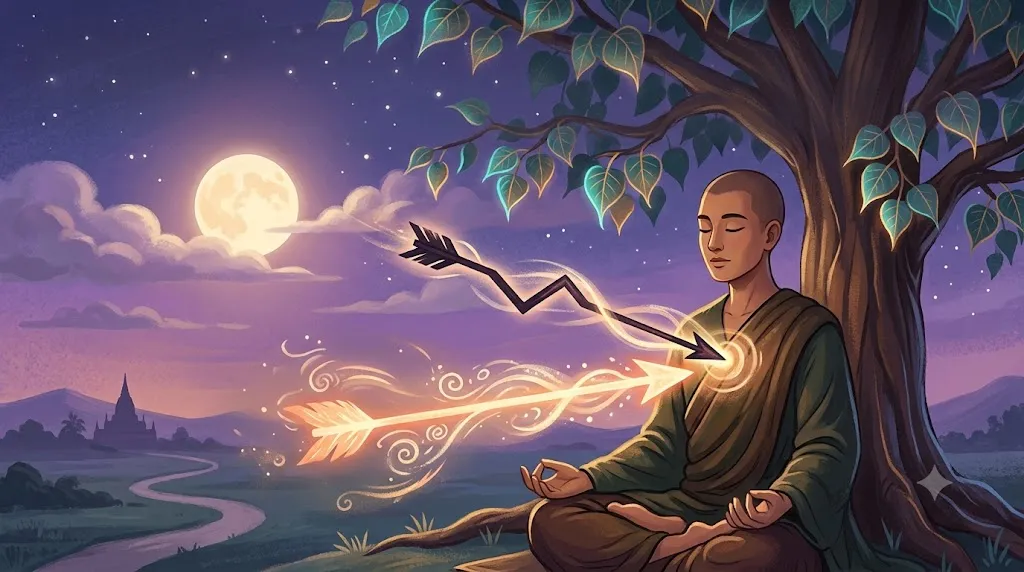
Life is filled with unpredictable events, and sometimes painful situations are unavoidable. An ancient Buddhist teaching explains this human experience through the story of the two arrows. You might be walking through a quiet forest and an arrow suddenly strikes your arm. This first arrow represents physical pain or unavoidable difficult circumstances in life. It hurts, but the initial damage is caused by the external event itself. However, many people then shoot a second arrow into themselves. This second arrow represents our mental reaction to the primary discomfort. It consists of negative thoughts, worry, anger, and self-pity. While we cannot always control or prevent the first arrow, we can choose how we react to it. The second arrow often creates far more suffering than the original injury. By recognizing our emotional responses, we can practice mindfulness, avoid firing the second arrow, and remain calm despite difficult circumstances.
Activities
Vocabulary
- Label: unavoidableAnswer: def_1
- Label: strikesAnswer: def_2
- Label: primaryAnswer: def_3
- Label: discomfortAnswer: def_4
- Label: mindfulnessAnswer: def_5
- Text: Impossible to stop or prevent from happening.
- Text: Hits or impacts something suddenly.
- Text: Main, most important, or coming first in order.
- Text: A feeling of physical or mental pain and unpleasantness.
- Text: The quality or state of being conscious and aware of the present moment.
- Before: Traffic delays during the morning commute are completelyAfter: in big cities.Answer: unavoidable
- Before: A sudden bolt of lightningAfter: the tall tree near the lake.Answer: strikes
- Before: TheAfter: goal of the project is to improve student reading skills.Answer: primary
- Before: Wearing tight shoes for a long walk can cause severe footAfter: .Answer: discomfort
- Before: Learning techniques such as meditation andAfter: can reduce daily anxiety.Answer: mindfulness
Comprehension
- Text: The first arrow in the teaching represents physical or external pain.Answer: true
- Text: The second arrow is shot by another person walking in the forest.Answer: false
- Text: The teaching suggests that we have full control over the first arrow.Answer: false
- Text: Our mental reaction to a situation causes the second arrow's pain.Answer: true
- Text: Practicing mindfulness can help people avoid the damage of the second arrow.Answer: true
- Answer: The first arrow represents physical pain in life.
- Answer: We often shoot a second arrow with our thoughts.
- Answer: Negative reactions cause more mental suffering.
- Answer: You can choose how to react to difficult situations.
- Answer: Mindfulness helps us remain calm in hard moments.
Written Expression
- Text:
Describe a time when you experienced a 'second arrow' reaction. What happened, and how did your thoughts affect your feelings?
- Text: How can practicing mindfulness help you in your daily life when unexpected problems happen?
Example 1: Last week, I spilled coffee on my shirt before work (first arrow). Instead of just changing, I got angry and complained all morning (second arrow), which ruined my mood for the whole day.
Critical Thinking
- Why do you think it is human nature to react with a 'second arrow' when something bad happens?
Can you think of a situation where feeling anger or worry might actually be useful, rather than harmful?
Recommended for You
Are Organic Foods Really Healthier?
Explore the debate over organic food, comparing nutritional benefits, farming standards, and costs for intermediate Engl...
How Pigs and Ducks Stay Healthy on the Farm
Explore how pigs and ducks use unique body adaptations like mud, feathers, and webbed feet to survive and thrive in thei...
A Helping Hand at the Pond
Read a story about Pig and Duck working together to rescue a stuck toy truck by the pond. Includes vocabulary, reading c...