Sea Turtles and Jellyfish: An Ocean Adventure
An A2 English reading lesson about how sea turtles safely eat jellyfish in the ocean.
Sea Turtles and Jellyfish: An Ocean Adventure
An A2 English reading lesson about how sea turtles safely eat jellyfish in the ocean.
Title
Sea Turtles and Jellyfish: An Ocean AdventureSeo_intro
An A2 English reading lesson about how sea turtles safely eat jellyfish in the ocean.Reading Text
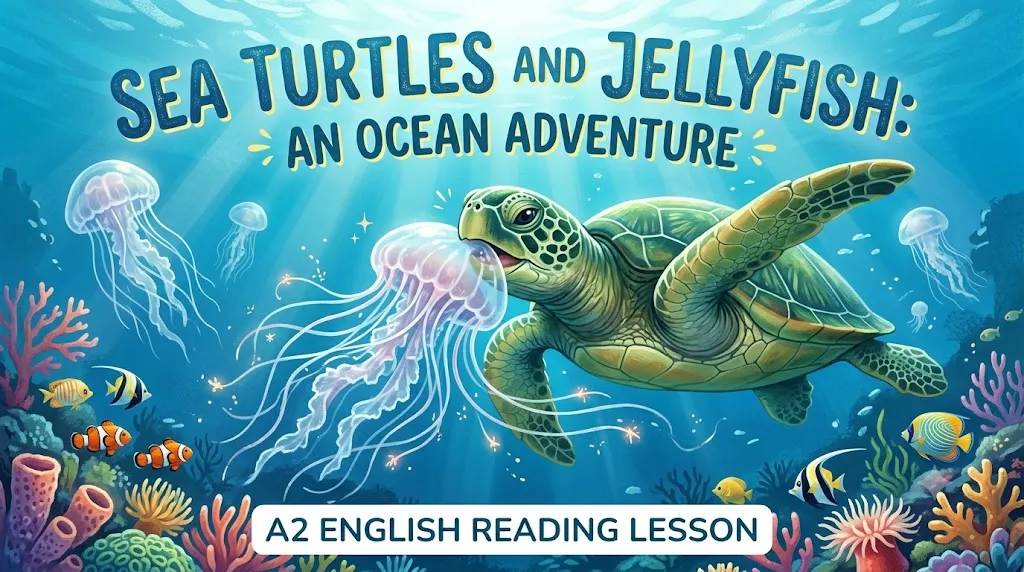
Sea turtles are fascinating marine animals that swim gracefully through the ocean. Many sea turtles love to eat jellyfish. Jellyfish have long tentacles that can sting other ocean creatures with neurotoxins. However, sea turtles are safe because they have thick skin inside their mouths and necks. When a turtle approaches a jellyfish, it closes its eyes to protect them from the tentacles. Then, the sea turtle uses its strong flippers to hold or push away the stinging tentacles while taking big bites of the jellyfish. Even though some jellyfish are dangerous to small fish, they are a delicious snack for sea turtles. Unfortunately, sea turtles face many dangers today, such as plastic pollution in the ocean.
Activities
Vocabulary
- Label: marineAnswer: 1
- Label: tentaclesAnswer: 2
- Label: neurotoxinsAnswer: 3
- Label: protectAnswer: 4
- Label: flippersAnswer: 5
- Label: pollutionAnswer: 6
- Text: relating to or found in the sea
- Text: long, flexible arm-like parts of certain sea animals
- Text: poisonous substances that affect the nervous system
- Text: to keep someone or something safe from harm
- Text: flat body parts used by sea animals for swimming
- Text: harmful materials or trash present in the environment
- Before: Dolphins and whales are famous examples ofAfter: creatures.Answer: marine
- Before: The jellyfish reaches out with its longAfter: in the water.Answer: tentacles
- Before: Sea turtles use their strongAfter: to push through ocean currents.Answer: flippers
- Before: Turtles close their eyes toAfter: them from painful stings.Answer: protect
- Before: Cleaning up trash on beaches helps reduce plasticAfter: in the sea.Answer: pollution
Comprehension
- Text: Many sea turtles like to eat jellyfish.Answer: true
- Text: Jellyfish tentacles are harmless to all sea creatures.Answer: false
- Text: Sea turtles close their eyes to protect them when eating jellyfish.Answer: true
- Text: Sea turtles have thin skin inside their mouths.Answer: false
- Text: Plastic pollution poses a threat to sea turtles today.Answer: true
- Answer: Sea turtles swim gracefully in the ocean.
- Answer: Jellyfish have long stinging tentacles.
- Answer: Turtles close their eyes to stay safe.
- Answer: A sea turtle uses flippers to push tentacles away.
- Answer: Plastic in the sea is dangerous for ocean life.
Written Expression
- Text: Why are sea turtles able to eat jellyfish without getting hurt?
- Text: What can people do to help protect sea turtles from ocean pollution?
Example Answer: Sea turtles can eat jellyfish because they have thick skin in their mouths and use their flippers to shield their eyes from stings.
Critical Thinking
- Why might a sea turtle confuse a floating plastic bag with a jellyfish in the ocean?
- How does the sea turtle's diet of jellyfish help maintain balance in the ocean environment?
References
Recommended for You

Are Organic Foods Really Healthier?
Explore the debate over organic food, comparing nutritional benefits, farming standards, and costs for intermediate Engl...
How Pigs and Ducks Stay Healthy on the Farm
Explore how pigs and ducks use unique body adaptations like mud, feathers, and webbed feet to survive and thrive in thei...
A Helping Hand at the Pond
Read a story about Pig and Duck working together to rescue a stuck toy truck by the pond. Includes vocabulary, reading c...