The Science of Laughter
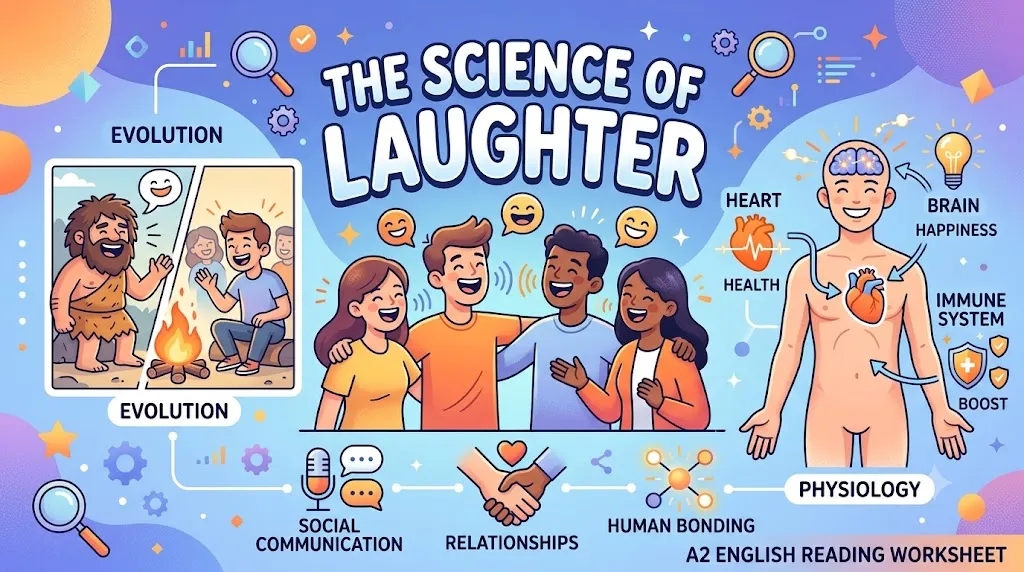
Learn about why humans laugh, how laughter evolved, and how it affects our bodies and relationships in this A2 English reading worksheet.
The Science of Laughter
Learn about why humans laugh, how laughter evolved, and how it affects our bodies and relationships in this A2 English reading worksheet.
Title
The Science of LaughterSeo_intro
Learn about why humans laugh, how laughter evolved, and how it affects our bodies and relationships in this A2 English reading worksheet.
Reading Text
Laughter is a strange and wonderful thing. When something is funny, our body changes in many ways. Our muscles contract rapidly, our breathing changes, and we might even cry. But why do we do this? Scientists think that laughter evolved a very long time ago. In fact, humans are not the only animals that laugh. Researchers found that rats giggle when someone tickles them. Many other animals, like apes and some birds, make special sounds when they play together. Scientists believe that early laughter was a signal to show friendly intentions during play. Today, humans laugh for many reasons. We laugh when we are amused, surprised, or even nervous. Laughter is also contagious. When you hear another person laugh, your brain wants to smile or laugh too. Laughing with friends makes us feel closer to them. In addition, laughter releases feel-good chemicals in our brain that decrease stress. It helps us feel better and keeps us healthy.
Activities
Vocabulary
- Label: contractAnswer: def1
- Label: evolvedAnswer: def2
- Label: giggleAnswer: def3
- Label: intentionsAnswer: def4
- Label: contagiousAnswer: def5
- Label: releasesAnswer: def6
- Text: To become smaller or tighter.
- Text: Developed gradually over a long period of time.
- Text: To laugh in a quiet or silly way.
- Text: Plans or aims to do something.
- Text: Easily spread from one person to another.
- Text: Lets something out or sets it free.
- Before: When you exercise, your musclesAfter: and become stronger.Answer: contract
- Before: Scientists study how animalsAfter: over millions of years.Answer: evolved
- Before: The children began toAfter: when the clown did a funny trick.Answer: giggle
- Before: A smile usually shows friendlyAfter: toward other people.Answer: intentions
- Before: Her happy smile was soAfter: that everyone in the room smiled too.Answer: contagious
Comprehension
- Text: Human muscles contract rapidly when we laugh.Answer: true
- Text: Humans are the only animals on Earth that make laughter-like sounds.Answer: false
- Text: Rats giggle when they are tickled by researchers.Answer: true
- Text: Laughter can make other people want to laugh or smile.Answer: true
- Text: Laughter increases your stress levels and makes you feel bad.Answer: false
- Answer: Laughter is a strange and wonderful thing.
- Answer: Humans are not the only animals that laugh.
- Answer: Rats giggle when someone tickles them.
- Answer: Laughter is also very contagious.
- Answer: It helps us feel better and stay healthy.
Written Expression
- Text: What is something that always makes you laugh? Describe the situation or person.
- Text: Do you agree that laughter is good medicine for stress? Why or why not?
Example Answer: Watching funny videos of cats always makes me laugh because they do silly things. I agree that laughter reduces stress because I always feel relaxed after laughing with my friends.
Critical Thinking
Why do you think humans laugh when they are nervous or uncomfortable, not just when something is funny?
- How does laughing with a group of friends differ from laughing alone while watching a video at home?
References
Recommended for You

Are Organic Foods Really Healthier?
Explore the debate over organic food, comparing nutritional benefits, farming standards, and costs for intermediate Engl...
How Pigs and Ducks Stay Healthy on the Farm
Explore how pigs and ducks use unique body adaptations like mud, feathers, and webbed feet to survive and thrive in thei...
A Helping Hand at the Pond
Read a story about Pig and Duck working together to rescue a stuck toy truck by the pond. Includes vocabulary, reading c...