Sea Turtles and Warming Temperatures
Learn about how climate change and rising temperatures are threatening sea turtle populations in this B1 reading lesson.
Sea Turtles and Warming Temperatures
Learn about how climate change and rising temperatures are threatening sea turtle populations in this B1 reading lesson.
Title
Sea Turtles and Warming TemperaturesSeo_intro
Learn about how climate change and rising temperatures are threatening sea turtle populations in this B1 reading lesson.
Reading Text
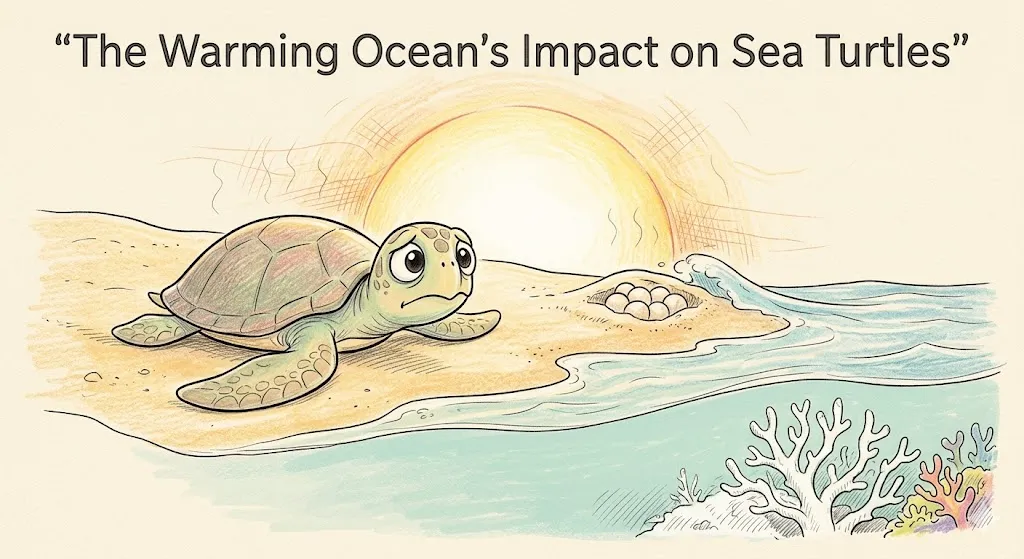
Sea turtles are ancient ocean creatures that have lived on Earth for millions of years. However, today they face many dangers, and one of the biggest threats is climate change. Warming temperatures are causing serious problems for sea turtle populations around the world. Unlike many other animals, a sea turtle's gender is not determined by its DNA. Instead, it is decided by the temperature of the sand where the eggs are buried. If the sand is cool, the eggs will hatch as male turtles. If the sand is warm, the eggs will hatch as female turtles. Because global temperatures are rising, the sand on nesting beaches is getting much hotter. As a result, many more female turtles are being born than male turtles. On some beaches, almost all of the baby turtles are female. Scientists worry that without enough males, sea turtles will not be able to reproduce in the future. Another problem caused by warming temperatures is rising sea levels. When the ocean gets warmer, the water expands and ice melts at the poles. This causes the sea level to rise. Higher sea levels can destroy the beaches where sea turtles go to lay their eggs. If the beaches disappear under the water, the turtles will have nowhere to build their nests. Finally, higher temperatures affect the food that sea turtles eat. Many sea turtles eat coral reefs and the small animals that live there. However, warm water causes coral bleaching, which kills the reefs. When the reefs die, sea turtles lose their homes and their food sources. Protecting sea turtles is very important. To save them, we need to reduce the pollution that causes climate change. We also need to protect their nesting beaches and keep the oceans clean. If we work together, we can help these amazing animals survive for many more years.
Activities
Vocabulary
- Label: threatsAnswer: def1
- Label: determinedAnswer: def2
- Label: reproduceAnswer: def3
- Label: expandsAnswer: def4
- Label: disappearAnswer: def5
- Label: bleachingAnswer: def6
- Label: pollutionAnswer: def7
- Text: dangers that might cause harm
- Text: decided or controlled by something
- Text: to have babies or produce young
- Text: becomes larger in size or volume
- Text: to become impossible to see or find
- Text: a process that makes coral turn white and die
- Text: harmful substances that damage the environment
- Before: Plastic in the ocean is one of the biggestAfter: to marine life.Answer: threats
- Before: The color of your eyes isAfter: by your parents.Answer: determined
- Before: When metal gets hot, it usuallyAfter: .Answer: expands
- Before: Many animals willAfter: if we destroy their habitats.Answer: disappear
- Before: Car exhaust and factory smoke are common types ofAfter: .Answer: pollution
Comprehension
- Text: Sea turtles have only lived on Earth for a few hundred years.Answer: false
- Text: The temperature of the sand decides if a baby turtle will be male or female.Answer: true
- Text: Hotter sand causes more male turtles to be born.Answer: false
- Text: Rising sea levels can wash away the beaches where turtles nest.Answer: true
- Text: Warm ocean water is healthy for coral reefs.Answer: false
- Text: are / creatures / ancient / Sea turtles / oceanAnswer: Sea turtles are ancient ocean creatures
- Text: temperatures / causing / are / Warming / problems / seriousAnswer: Warming temperatures are causing serious problems
- Text: to / turtles / go / the / beaches / Sea / lay / eggs / theirAnswer: Sea turtles go to the beaches to lay their eggs
- Text: water / When / warmer / the / ocean / the / expands / getsAnswer: When the ocean gets warmer, the water expands
- Text: need / protect / We / their / beaches / nesting / toAnswer: We need to protect their nesting beaches
Written Expression
- Text: Why is the temperature of the sand important for sea turtle eggs? Explain in your own words.
- Text: What can humans do to help protect sea turtles from climate change?
Example: The sand temperature determines if the baby turtles will be male or female. Warmer sand makes females, and cooler sand makes males.
Critical Thinking
Imagine you are a scientist trying to solve the problem of too many female sea turtles. What are some creative ideas you might try to cool down the nests?
How does the disappearance of coral reefs affect other marine animals besides sea turtles? Discuss the chain reaction in the ocean ecosystem.
References
Recommended for You

Are Organic Foods Really Healthier?
Explore the debate over organic food, comparing nutritional benefits, farming standards, and costs for intermediate Engl...
How Pigs and Ducks Stay Healthy on the Farm
Explore how pigs and ducks use unique body adaptations like mud, feathers, and webbed feet to survive and thrive in thei...
A Helping Hand at the Pond
Read a story about Pig and Duck working together to rescue a stuck toy truck by the pond. Includes vocabulary, reading c...